GLUT-1, a protein that transports sugars into human tissue cells, is deficient in the brain and peripheral tissues of children with Huntington's disease, but not in adults.
Breakthrough in the study of Huntington's disease: an alteration in the pediatric HD is not present in the adult HD
Our brain consumes over a quarter of the energy needed to make our entire body function, translated into approximately 200-300 kilocalories per day. Without sugars, it would not be able to function properly and support very important functions such as the activity of neurons and the processing of information.
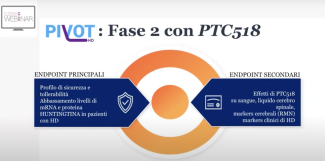
PTC518 is a small molecule capable of reducing the protein that causes Huntington's disease.
Pivot-HD: new hope for the treatment of Huntington Disease
PTC518 is a small molecule capable of reducing the protein that causes Huntington's disease (HD).
Pridopidine did not show benefits on functional capacity in people with Huntington's disease
Pridopidine has a long history. The drug was initially tested by the NeuroSearch company which believed that it had an effect on dopamine as its main mechanism and was therefore able to act on movement coordination. On this assumption, starting from 2007, two studies were conducted, MermaiHD and HART, both failed.
In 2012, Teva Pharmaceuticals bought the right to test pridopidine again and promoted a third study, PRIDE-HD, which tested different doses, again with the aim of verifying the drug's effects on motor function.
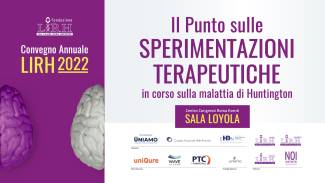
An update on therapeutic trials for the treatment of Huntington's disease.
The LIRH Foundation Annual Conference back in attendance.
The last five years have led to great milestones in the history of Huntington's disease research. At least three can be highlighted:
1) The setting up of the largest research network ever created for a rare disease, capable of connecting researchers from all over the world;
2) The launch of experimental therapies potentially capable of modifying the course of the disease by directly affecting its cause;
As always, we are closely following the developments of the HD ongoing trials. Unfortunately, not too encouraging news arrives on the studies of Novartis (with branaplam) and UniQure (gene therapy with AMT-130).
As always, we are closely following the developments of the HD ongoing trials. Unfortunately, not too encouraging news arrives on the studies of Novartis (with branaplam) and UniQure (gene therapy with AMT-130). Both pursue the strategy of huntingtin lowering, both mutated and normal length - with different tools - to counter Huntington's disease.
uniQure announced the dosing of the first two patients in its European open-label Phase Ib/II clinical trial of AMT-130, a potential one-time gene-therapy approach for the treatment of Huntington’s disease. The clinical trial is taking place at several sites in Poland, the United Kingdom and Germany.
On the last February 2, 2022 uniQure sent out a press release with new updates on their gene therapy for Huntignton Disease.
PTC Therapeutics recently published an article in the prestigious journal Nature Communications describing the functioning of a series of small molecules, that can be taken orally, and are able to distribute themselves in the brain and also in the rest of the human body.
Reducing levels of huntingtin, the protein that, when mutated, causes Huntington's, was the first strategy designed to directly target the cause of the disease.
However, the current approaches have some limitations, as the molecules under study:
Thanks to the children met in the context of the 'Space Huntington' project, it was possible to grasp and describe the signs of HD much earlier than we have seen so far.
The recent fase III Generation HD 1 study data discloure from Roche was accompanied by the announcemenet of re-testing the drug in a Fase II study on a subgroup of patients.
A few days ago Roche announced that a Phase II study with tominersen will start soon. Tominersen is the ASO (Oligonucleotide Anti Sense) whose experimental administration was interrupted in March 2021, following the negative evaluation of its effects on patients, by an Independent Evaluation Commission. In this article we take stock of what we know and what we don't know yet.
Time spent on hobbies throughout life helps to better cope with loss of cognitive function and independence in people with early stage Huntington's disease.
The study, entitled Cognitive Reserve in Early Manifest Huntington Disease Patients: Leisure Time Is Associated with Lower Cognitive and Functional Impairment, was recently published in the Journal of Personalized Medicine, in the special issue on Huntington's disease, edited by prof. Ferdinando Squitieri.
It was conducted by the IRCCS Casa Sollievo della Sofferenza and by the LIRH Foundation, in collaboration with the Sant’Andrea Hospital in Rome and the IRCCS Carlo Besta in Milan.